Sunday, May 6, 2012

NFP =\= Catholic Birth Control

There is a huge misconception about NFP, that it is merely Catholic “birth control”. While NFP can be used to avoid pregnancy, it is also highly effective at tracking and treating women’s health issues without the use of the ‘band-aid’ of birth control. NFP has proven effective at helping women deal with their gynecological issues (endometriosis, PCOD, PMS, pelvic pain, amenorrhea, dysmenorrhea, etc), as well as space their pregnancies, accurately date their pregnancies, and effectively determine any problems with pregnancy. Even when NFP is used to avoid pregnancy, to do so requires great sacrifice and daily planning and acceptance. That essentially prevents most casual “birth control mentality” users from abusing the system.

Not only is NFP a moral alternative to avoiding pregnancy; it is also highly effective at achieving pregnancy. That is yet another reason why NFP is not Catholic birth control -- the exact same system can be used to achieve and maintain pregnancy! No birth control drugs can claim that! Contrary to what many main-stream media outlets (including American Pregnancy, the CDC, WHO, etc) indicate, NFP has been thoroughly reviewed in peer-reviewed journals. Not to mention that NFP has been used with approximately a 100% effectiveness rate for avoiding and a 71% effectiveness rate for achieving pregnancy (the first statistic is true for Third World countries; the second is for couples with primary or secondary infertility in the US). As a matter of fact, NFP is more successful and much less invasive than IVF.

Another misconception the mainstream touts is that NFP is difficult to learn, practice, and understand. Learning NFP is no more difficult (and far less invasive) than being examined by a doctor to be given a prescription for birth control. Most methods have a manual, online information, and face-to-face instructors (complete with email addresses, phone numbers, etc) to guide you through the learning (and practice) issues you may encounter. As a matter of fact, NFP instructors invariably have actually used the system themselves. While having control over your urges for intimacy can be difficult, the benefits far outweigh the deficits. After all, no other method lets you bond as intimately as NFP. Tracking fertility signs literally takes about 3 extra seconds for each use of the toilet. Actually, evaluating the fertility signs is probably something most women do without realizing it on a daily basis. So, all-in-all, the mainstream (yet again) misinforms the public about the best option for family planning.

So from a women's health perspective, NFP has many more benefits (and less deficits) than birth control. From a moral perspective, again, NFP has many more benefits than deficits than birth control. From a financial perspective, once again, NFP has more benefits than deficits. It is hard to believe that it is not more widely taught and practiced. There is no risk of personal harm when NFP is practiced, unlike birth control, abortion, and IVF. So why not investigate NFP instead of blindly following the mainstream?

This is a site claiming no ties to any particular NFP method. http://nfpsite.aldred.org/primer.php

This is a site that embodies care for women as it's purpose. http://www.naprotechnology.com/ncwh.htm

This site has a list of references to NFP, what it does, who it can help, and journal articles about it. http://www.naprotechnology.com/references.htm

This is a page that explains the scientific foundation of the Creighton Model of Fertility Awareness. http://www.unleashingthepower.info/PDFs/IA-SciFoundationCrMS.pdf

This is a page with information on NFP verses IVF. http://www.physiciansforlife.org/index2.php?option=com_content&do_pdf=1&id=2059

Monday, April 16, 2012

Cutting It Close

It seems like everyone is getting haircuts lately. My friend and I cut our hair off to donate for charity (Locks of Love possibly, except I read they aren't very good at using the hair -- they sell it). My big brother practically shaved his head recently after practicing on his 2 year old son. Andrew periodically cuts his hair off too. I decided Simon should get into the club... Mom was my photo journalist for the event. You're the audience! Hopefully the photos appear in the order they happened, but this iPad isn't that great at editing blogs...


Thursday, April 5, 2012

Lent: Luminious Thursdays

The fifth Luminous Mystery is the Institution of the Eucharist. From this mystery we are to gain the fruit of adoration. Here's my take.

The other day, a discussion came up between me and a few of my co-workers. I'm the only practicing Catholic of the group. Our conversation wandered until one of my co-workers brought up Christ's words to "Do this in memory of Me". As a devoted Non-Catholic Christian, his opinion was that he doesn't need to participate in a communion service often because he seldom forgets Jesus. I'm definitely not a quick thinking kind of person, so I didn't say anything. However, the thought stuck in my brain as a refrain.

My non-Catholic Christian friend's comment that he doesn't need communion to remind him of Christ emphasized for me, the rift between our faiths. You see, as Catholics it isn't that we constantly forget Christ. Instead, we know we constantly need the support the Eucharist can give us. We take Jesus's words literally. He offered Himself as our food and drink. To memorialize His great Sacrifice and take Him at His word, we invoke His name each and every time we join for Mass. As the priest says the words of Consecration and the veil of time lifts. The priest is actually a co-celebrant in the Greatest Sacrifice ever made.

Some of our non-Catholic brethren think Catholics are too focused on the death of Christ and we forget about the purpose behind it. In reality, you cannot separate the two. Our salvation was bought for us by the blood of Christ. Without His suffering, death, and subsequent Resurrection we would have no Salvation. Much like Paul said in his letter to Timothy, faith and works are BOTH necessary for salvation. The same is true of Christ's suffering being as necessary to our salvation as His Resurrection.

At each Mass, we call to mind not only Christ's life and teachings (the Liturgy of the Word), but also His suffering and death, prefaced with His gift of His Body and Blood (the Liturgy of the Eucharist). The two are intricately melded together as the readings in the Liturgy of the Word often contain references to Christ's suffering. The words of Consecration are a direct quotation of Christ's words at the Last Supper. Throughout both parts of the Mass we are also reminded of our Salvation through Christ.

This remembrance of Christ is not meant as if we're going to forget Christ. Instead it is meant for us to adore Him through imitation of Him. Remember, imitation is the sincerest form of flattery. Just as thinking about or looking at photos of your friends and family doesn't replace actually seeing them and visiting them, neither does just thinking of Christ replace worshiping Him. Each time we visit with Christ whether at Mass or adoration of the Eucharist, we are getting closer to Him and gaining God's graces to continue with our journey to Him

Total Pageviews

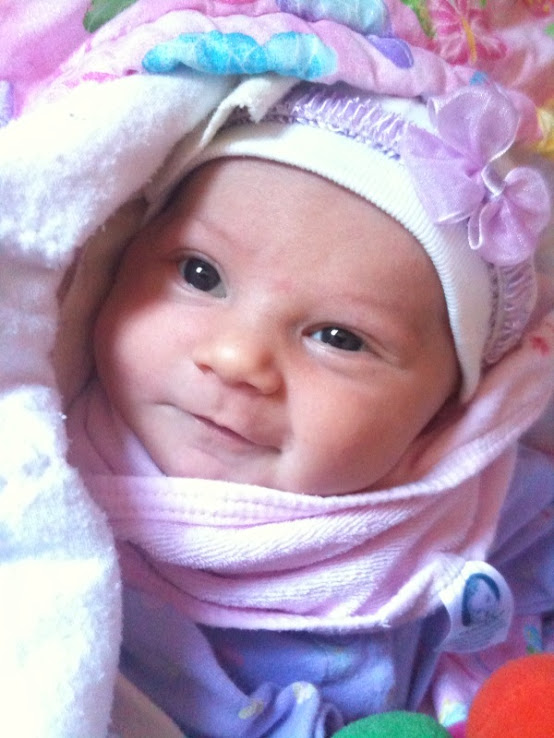
Smiling already at 2 weeks

Smiling already at 2 weeks
Rachel has been smiling as a response to other people since day one.

And two shall become one...

And two shall become one...
In 2006, Andrew & I became one before God and family! Shortly thereafter we became 3 with the birth of Simon in 2008... Then 4 with the addition of Rachel in 2009!

Erika's Miracle Journey Continues's Fan Box